a guest post by Stephanie Cardel
“Afterward Moses and Aaron went to Pharaoh and said, ‘This is what the LORD, the God of Israel, says: Let my people go, so that they may hold a festival to me in the desert. Pharaoh said, ‘Who is the LORD that I should obey him and let Israel go? I do not know the LORD and I will not let Israel go,’” (Exodus 5:1-2, NIV)
When I was a girl, I took gymnastics. I was not very strong or flexible, so when we got uneven parallel bars, where it’s important to be both, I was quite pitiful. But it wasn’t from lack of trying. At first, my hands were tender and red, aching and bruised. I pushed through it. Then, I developed blisters—big, weeping, blisters. I would get tissue from the bathroom and stuff it under my leather grips to cushion my poor hands and keep the grips dry. Eventually, I grew calluses. I was so proud of those hard-won calluses.
It takes time to grow calluses. It takes time to grow a callused heart.
How often does the Holy Spirit prick my heart to do something or say something and I ignore it? How long did it take for me to stop feeling that prick of conscience about the language or sex in an “R” rated movie? When did it happen? When did I harden my heart? When did I grow a callus on my heart so that I could ignore the Holy Spirit and immerse myself in worldly things without feeling guilty for it?
It took time. It took a heart that was already pre-disposed to want to do what it wanted to do whether it honored God or not.
“The LORD said to Moses, ‘When you return to Egypt, see that you perform before Pharaoh all the wonders I have given you the power to do. But I will harden his heart so that he will not let the people go,” (Exodus, 4:21, NIV).
Pharaoh did not know the God of the Israelites. He didn’t even know Moses. He had his own gods and his slaves and everything was going smoothly for him. By his own free will he had no desire to know the God of the Israelites, and he wasn’t about to give up his slaves. His heart was already inclined to resist.
God strengthened his resolve. He hardened his heart. He didn’t just say, “Kablam! You will refuse Moses!”
No. Remember, it takes time to build a callus. It also takes a will already pre-disposed.
I used to think this was so contradictory and complicated. How can God claim to give us free will and then harden Pharaoh’s heart? It’s not fair to punish the poor Egyptians if God made Pharaoh say, “No.”
But he didn’t make Pharaoh say it. He hardened his heart—that’s different. It says eighteen times that he “hardened his heart,” which means he stiffened his resolve. How? With ten horrible plagues! Duh. How did I ever think that was contradictory? Wouldn’t you be disinclined to acquiesce if this God who wanted a huge favor from you kept bringing plagues upon you? I mean, when I want something from someone, I’m more likely to come bearing gifts to soften their heart. Aren’t you?
While teaching abstinence-based sex education and writing an advice column for the online ministry, Daughter of Delight, I encountered many teens and adult women who felt that their sin was too big for God to forgive. They carried around such a burden of guilt, that it kept them from seeking a relationship with God. I knew that my main character in my YA Contemporary, This Isn’t Shakespeare, was going to have to cross that line and have pre-marital sex (off page) to feel that kind of guilt, so that she could model forgiving herself and coming to God for forgiveness.
But how does a Christian girl get to the point where she believes pre-marital sex is okay? Add in destructive self-talk, a narcissist boyfriend, a deep desire for romance, which all aid in building that callus on her heart, and slowly, she turns from trusting in her relationship with Christ and puts her trust and identity in the relationship with her boyfriend. With our sex-saturated society, many girls end up in sexual relationships. They also romanticize relationships and have trouble recognizing when they are in a toxic relationship, sometimes believing they deserve bad treatment. This Isn’t Shakespeare speaks to both of these hard issues like no other. The biggest takeaway is that God forgives all those who come to Him in repentance, and we need to trust in His plan, accept His forgiveness and live for His glory to find our happily ever after.
There are discussion questions at the end that can foster parents engaging with their teens on those awkward topics. But I also went a step further and wrote a three-week devotional study for teens titled, Whatever is True to give them the Biblical basis for rooting their identity in Christ so they won’t be persuaded by cultural ideas that conflict with Bible truths. (It would make a great grad gift!)
“The heart is deceitful above all things and beyond cure. Who can understand it?” (Jeremiah 17:9, NIV)
The world tells us to follow our hearts, but our hearts can lead us to believe the lies of the world. When we can’t hear God or feel Him, it’s because we’ve built up those calluses. He’s there. He still loves us and wants a relationship with us. Let us bravely lay our worldly desires and guilt at the foot of the cross and seek to glorify Him in all we do.
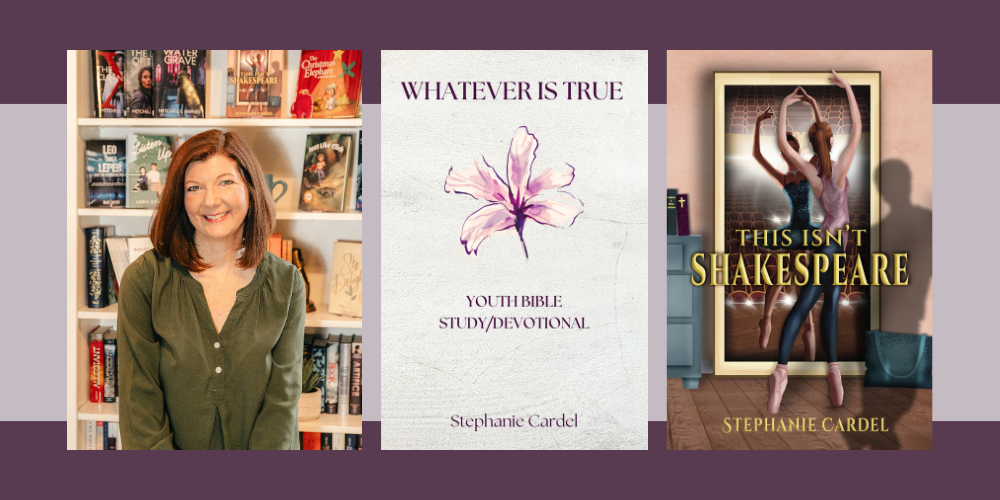
More about Stephanie:
Stephanie Cardel is a former dance teacher who lives in middle Tennessee and writes hope-filled stories with flawed characters who find forgiveness and redemption. When she’s not agenting or writing, you can find her curled up with a good book or playing with her grandchildren. You can connect with her on Instagram or her website.