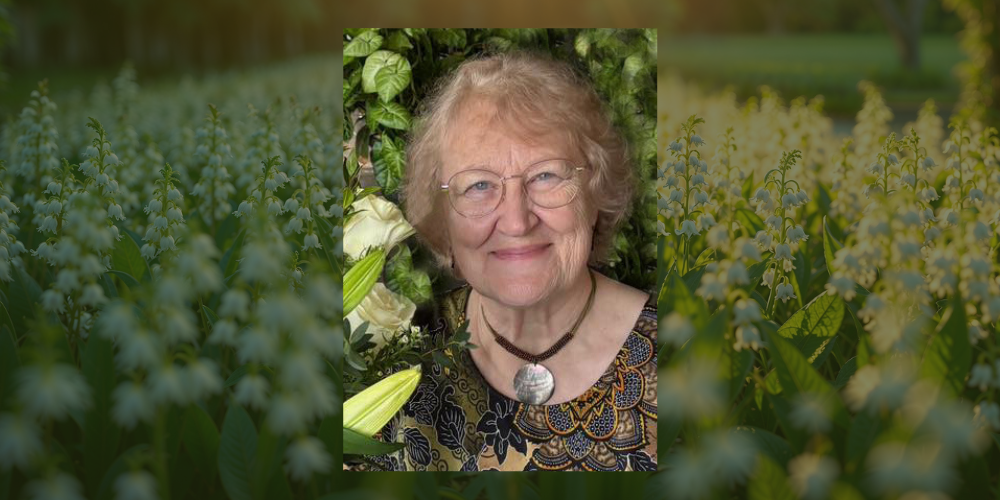
Today on the blog, we have an interview with Connie Kallback, author of Chasing the Blue Boat.
D. T.: Great to have you with us, Connie. Let’s go ahead and get started with today’s interview.
In what ways do you think you’re brave as an author?
Connie: As an English major in college, I didn’t have the courage to write fiction that would give readers a peek into my imagination. Although I thought I’d be great at research then, I’ve discovered how life changes us. Writing a novel, especially one with a plot that centers on the death of a child and the parents’ resulting grief and divorce in Chasing the Blue Boat seems brave to me.
I’ve never thought of brave as a way to describe writing about death, divorce and grief, but I think it fits. Those topics aren’t common in Christian Fiction, but they show what sometimes happens in life and what it’s like when characters either stray from faith or choose to lean on God in hard times.
D. T.: I find books about difficult topics challenge readers in a way other stories often don’t. Thanks for tackling brave topics in your work.
So, where did you get the inspiration for Chasing the Blue Boat?
Connie: I’ve enjoyed a great many years of living that have given me a massive storehouse of real-life incidents to dig through. In spite of a promise to my husband to write my first novel in retirement, I didn’t get to it right away. After returning to writing short pieces for magazines and journals, I made a few unsuccessful starts at a novel. While I let everything incubate, I began to relive an experience from age six or seven of creeping sideways behind my brother along a narrow ledge of the Wyoming State Capitol building in Cheyenne. We had bounded up the twenty or so steps at the side entrance, maneuvered somehow onto that ledge and pressed ourselves to the side of the building. I don’t know if we were 12, 15 or 20 feet from the ground, but it felt like a steep mountain as I peered down. It scares me to this day to think how easily we could have slipped. That feat became the main scene in the first chapter.
D. T.: Oh wow. That sounds like quite an experience.
What’s the most surprising thing you learned while writing your book?
Connie: The characters showed me at certain times what they were going to do or say. That made the story turn in directions I didn’t anticipate. The father, stuck in blame, wouldn’t allow himself to grieve. His daughter Dana lashed out in anger. When sadness came, I cried with them. But I was also happily surprised at the sense of humor that welled up from some of the characters later on.
D. T.: I love experiencing characters doing what they want. There’s nothing quite like it.
Which of your characters is your favorite?
Connie: Seth, a character who enters the story later in the book, made me laugh. No one would guess my favorite part of life is laughter because I cried while writing the whole first half. I’ve never known anyone quite like Seth. His ability to guide others with his faith in God is admirable for a 14-year-old boy who can’t dally too long in a serious mode.
D. T.: Characters so often surprise us.
On another topic, is there a writing craft book that’s helped you as an author?
Connie: From Where you Dream: The Process of Writing Fiction by Robert Olen Butler has been an invaluable resource that arrived on my shelf years ago. If you are interested at all in the art of writing, it is an excellent guide. He shares detailed advice about the writing process and techniques such as how those in film can be effective in writing narrative. Laying his own work on the line, he gives an example of a short story that didn’t meet his expectations and allows readers full access to the version he revised eighteen years later. One particular piece of advice explains his book title: Begin writing first thing in the morning before your first cup of coffee while your mind is fresh and waking up, “from where you dream.”
D. T.: Finding writing advice that works for us as individual writers is so valuable.
Back to the subject of your book, who’s it dedicated to and why?
Connie: My book is dedicated to my husband Gary, my clear-thinking first reader. While I was wandering around the first couple of chapters and not sure where the story was going, I drew from another incident in my early life. I once joined my brother as he put his toy sailboat into the water runoff by the curb after a rainstorm. It took off, cutting swiftly along the makeshift stream like a real boat. We ran behind it but couldn’t keep up. Then, whoosh! It disappeared down a storm drain! The sudden ending took our breath away.
Gary said, “They have to find that boat.”
I couldn’t let myself stray from reality. “Impossible! It went down the drain! I saw it!”
He left the room saying, “They’ve pulled cats and dogs from those drains. They can find your boat.”
I sat alone thinking about it and finally decided to change it to see what might develop. Voila! The boat gave the novel its trajectory and the title of the book.
So this is my advice to writers about using true-to-life incidents: Don’t be afraid to change the way an incident actually happened to make it work for your story line. Robert Olen Butler warned about this very thing with one of his stories, but I forgot and had to learn it the hard way.
D. T.: It’s funny what we get attached to in our writing sometimes. I’m glad you were able to do what was best for your story.
On a similar note, what makes you unique as a writer?
Connie: Because I’m older than most writers you might run into who have just published a first novel, I’ve had lots of life experiences, as I’ve said. My first husband and I divorced when our two sons were out of school. I met Gary who had four children ages 3 to 7, married him and helped him raise his four. I’ve also lived in six different states from west to east to south, worked at many jobs before completing college and had more than one career. I taught high school English for a few short years in public and private schools. Then I became a writer with a start-up telecommunications publishing company in 1983 before divestiture of AT&T and Ma Bell, managing editor with McGraw-Hill and Prentice Hall and acquisitions with CPP Inc, now the Myers-Briggs Company. But maybe the best part came from my childhood. My mother had twins when I was six. She was too busy taking care of them to know what I was up to. Without that, I wouldn’t have written Chasing the Blue Boat.
D. T.: Childhood adventures can be some of the best sources of inspiration.
Do you have a main Scripture for your writing?
Connie: Psalm 46:10, Be still and know that I am God, must be the shortest memory verse of my life. It’s a command and an ultimate sign of authority that I find most comforting. In a few words of one syllable each, God tells us He is in control through turmoil and upheaval, in sadness and in joy and when writing is a struggle or a breeze. Writing does not come easy to me. I need God as my writing partner and in the rest of my life. I can accomplish nothing without Him. When I’m worried or upset in any way, those words remind me He’s always here.
D. T.: And what a comfort it is to have Him with us as we write every word.
What is the best feedback you’ve received from a reader?
Connie: If I can include a copyeditor as a reader, I’d like to say that the wonderful copyeditor who worked with me at Ambassador International gave me some important feedback. She noted that she felt great sympathy for the first main characters but didn’t feel it for Seth and Gram in the final part of the novel. Their lives were too perfect; they didn’t want for anything. Wouldn’t you know they were two of my favorite characters? But her advice rang true. They did, in fact, yearn for other things in life, but I failed to share that with readers. It wasn’t a massive fix. A few stories into their lives gave readers the insight they needed.
D. T.: Editors can be some of the most insightful readers, for sure.
Our time is almost up, so we have just one more question. What do you hope readers will take away from your book?
Connie: My hope is that readers who have lost loved ones can keep their memories alive by recalling and sharing their stories, including incidents that bring joy. Dana’s parents don’t want to talk about her lost brother. Only Seth urges her to do that. He reminds her of ways her brother, though in heaven, still helps her. Others in the story who suffer from a tragic loss also experience how God’s love, grace and power of forgiveness provide the will to go on in times of grief. In this way, I hope this novel of faith will bring comfort to those who need it.
D. T.: It’s been great having you with us today, Connie. Thank you so much.
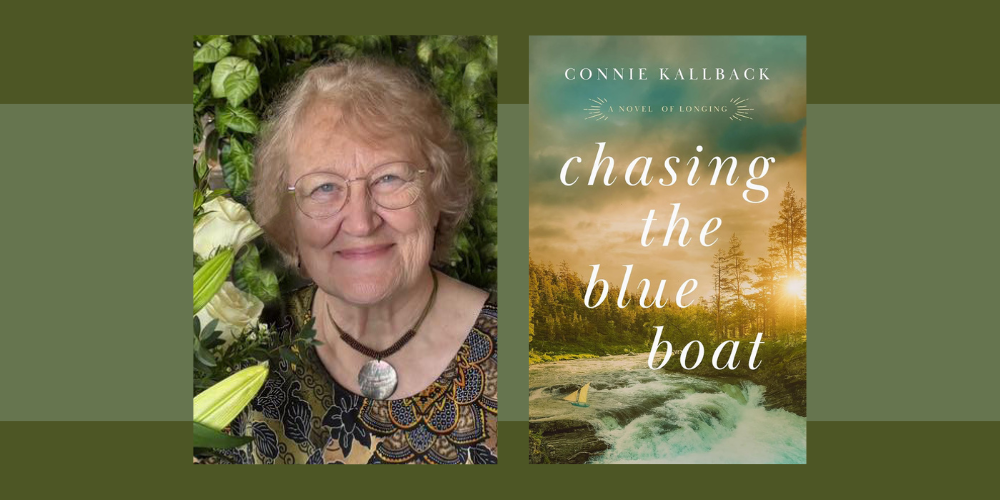
About Connie:
Connie Kallback transitioned from teaching English to publishing with McGraw-Hill, Prentice Hall and CPP, Inc, in positions ranging from writer to managing editor. Her early writing, penned while teaching, appeared in magazines and newspapers, and her recent work in literary journals.
Retired and no longer wearing the hats of Mary Poppins or Sherlock Holmes, necessities of raising six children in two separate families, she writes in South Carolina where she lives with her husband.