a guest post by Linda Shenton Matchett
While researching my latest series, The Resistance Chronicles, which features four siblings and their cousin who join various resistance groups in Scandinavia and northern Europe during World War II, I discovered that 99% of the physicians in Norway resigned from the medical professional association to prevent it from being taken over by the Nazis during the occupation. I got to wondering how doctors fleeing the country, going underground, or joining resistance groups impacted the public. Around the same time, a friend’s daughter suffered a miscarriage. I decided to explore how a married couple might handle such a loss during a time of war and occupation by a foreign power.
Norwegian Nights features Gustav and Oda Westgard, a couple in their late thirties who have been unable to have children since marrying. Oda finally gets pregnant but suffers a miscarriage. Gustav is convinced if medical care had been available, the loss would have been prevented. Already angry about the Nazi occupation, his anger becomes personal, and he is willing to do anything to rid his country of the Germans. If that means harming them, so be it. He turns away from Oda and against her wishes, leaves home to join the resistance.
Unsurprisingly, performing acts of violence doesn’t make him feel better, doesn’t assuage his grief or anger. But God (my two favorite words) intervenes and sends people who help him come to terms with his pain, because that’s what our heavenly Father does for us.
I am terrible at asking for help with emotional issues. I’m a pull-yourself-up-by-your-bootstraps kind of girl, but fortunately I have both family and friends who know that about me and insert themselves into my life as needed (whether I want it or not). I’m sure that’s a “God-thing.”
It is my hope that Oda’s and Gustav’s story will resonate with readers as they deal with their own losses.
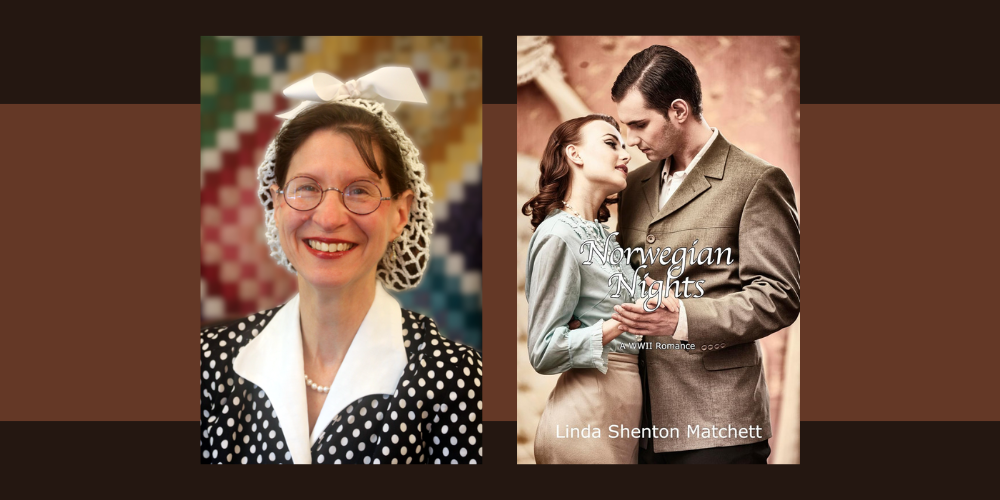
More about Linda:
Linda Shenton Matchett writes happily-ever-after historical Christian fiction about second chances and women who overcome life’s challenges to be better versions of themselves. A native of Baltimore, Maryland, she was born a stone’s throw from Fort McHenry (of Star-Spangled Banner fame) and has lived in historical places all her life. She is a volunteer docent and archivist at the Wright Museum of WWII. She now lives in central New Hampshire where she explores the history of this great state, immerses herself in the imaginary worlds created by other authors, and drinks copious amounts of tea.